Fabric implementation on Retail Chain
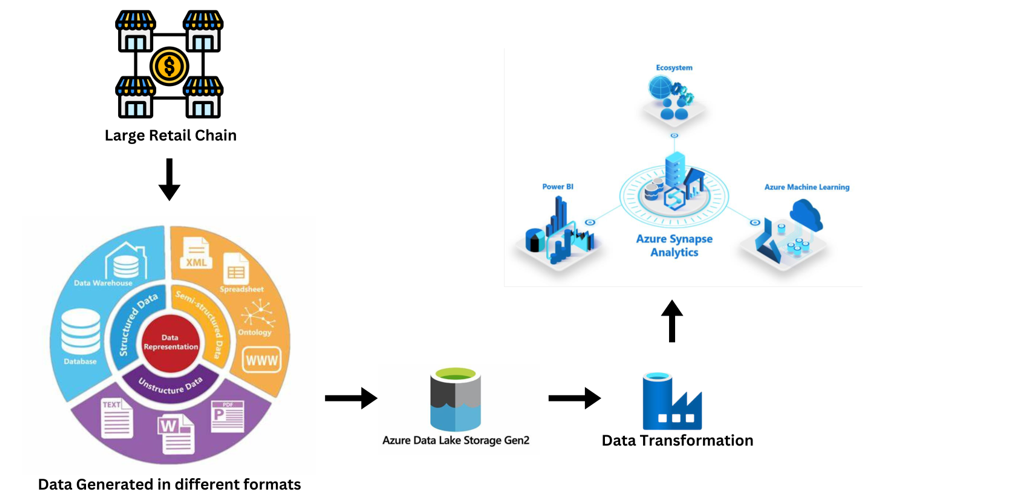
A Large Retail Chain (let’s call them RetailCo) with hundreds of stores was struggling with a data nightmare. Sales figures resided in point-of-sale systems, customer information lived in a separate CRM platform, and inventory levels were scattered across countless spreadsheets. This fragmented data landscape made it nearly impossible to get a clear picture of the business. They needed a way to unify their data and unlock its potential – Enter Microsoft Fabric.
The Problem: Data Silos and Fragmented Insights
RetailCo faced several challenges related to their scattered data:
- Siloed Data: Information was trapped in departmental systems, making it difficult to understand how different parts of the business interacted (e.g., how marketing campaigns impacted sales).
- Limited Visibility: Without a central view, executives lacked insights into customer behavior, inventory levels, and overall business performance.
- Slow and Complex Data Integration: Moving data between systems was a time-consuming and error-prone process, hindering analysis and delaying informed decisions.
- Data Inconsistency: Inconsistent data formats and definitions across systems led to inaccurate reporting and unreliable decision-making (e.g., overstocked items due to inaccurate inventory data).
These issues were impacting RetailCo’s ability to:
- Optimize Inventory Management: Inconsistent stock levels could lead to lost sales due to out-of-stock items or excessive carrying costs for overstocked products.
- Personalize Customer Experience: Without a unified view of customer data, RetailCo couldn’t tailor marketing campaigns or product recommendations to individual preferences.
- Make Data-Driven Decisions: Fragmented data made it difficult to identify trends, anticipate customer needs, and make strategic business decisions (e.g., deciding on store locations or new product lines).
The Solution: Microsoft Fabric – A Unified Platform for Data Harmony
Microsoft Fabric offered RetailCo a comprehensive solution to their data woes. Here’s how the different components of Fabric addressed their specific needs:
- Data Lake with Azure Data Lake Storage: Fabric uses Azure Data Lake Storage as a central repository for all RetailCo’s data, regardless of its source (structured, semi-structured, or unstructured). This eliminates data silos and creates a single source of truth.
- Data Integration with Data Pipelines: Pipeline acts as the data plumbing, automating the process of extracting, transforming, and loading (ETL) data from various sources into the central data lake. This ensures that data is clean, consistent, and ready for analysis.
- Real-time Analytics with Azure Synapse Analytics: Fabric integrates with Azure Synapse Analytics, a powerful analytics service that allows RetailCo to analyze data in real-time. This enables them to monitor key metrics like sales trends, inventory levels, and customer behavior as they happen, allowing for immediate adjustments and proactive decision-making (e.g., launching targeted promotions based on real-time sales data).
- Business Intelligence (BI) and Reporting with Power BI: Power BI, another integral part of Fabric, provides user-friendly tools for creating insightful reports and dashboards. RetailCo’s business users can leverage Power BI to visualize data, identify trends, and gain insights that inform better decision-making across all departments.
- Data Governance and Security: Fabric ensures data security and compliance through robust access controls and governance features. This gives RetailCo peace of mind knowing their valuable customer data is protected.
The Benefits: From Data Chaos to Informed Decisions
By implementing Microsoft Fabric, the Retail Chain unlocked a treasure trove of benefits:
- Improved Data Accessibility: With all data residing in a central location, users across the organization can easily access clean and reliable data, empowering them to make data-driven decisions.
- Enhanced Operational Efficiency: Streamlined data integration, data pipelines built with Dataflow, and real-time analytics enable RetailCo to optimize inventory management, improve supply chain efficiency, and reduce operational costs.
- Data-Driven Customer Insights: Fabric facilitates the analysis of customer behavior patterns using Power BI’s reports and dashboards. This leads to targeted marketing campaigns, personalized recommendations, and improved customer satisfaction.
- Simplified Data Management: Fabric’s unified platform eliminates the need for managing multiple data tools and disparate data sources. This reduces complexity and IT overhead, freeing up resources for other strategic initiatives.
Conclusion:
Microsoft Fabric empowered the Retail Chain to overcome their data fragmentation challenges. The platform facilitated a data-driven culture, resulting in improved operational efficiency, enhanced customer insights, and better decision-making across.