




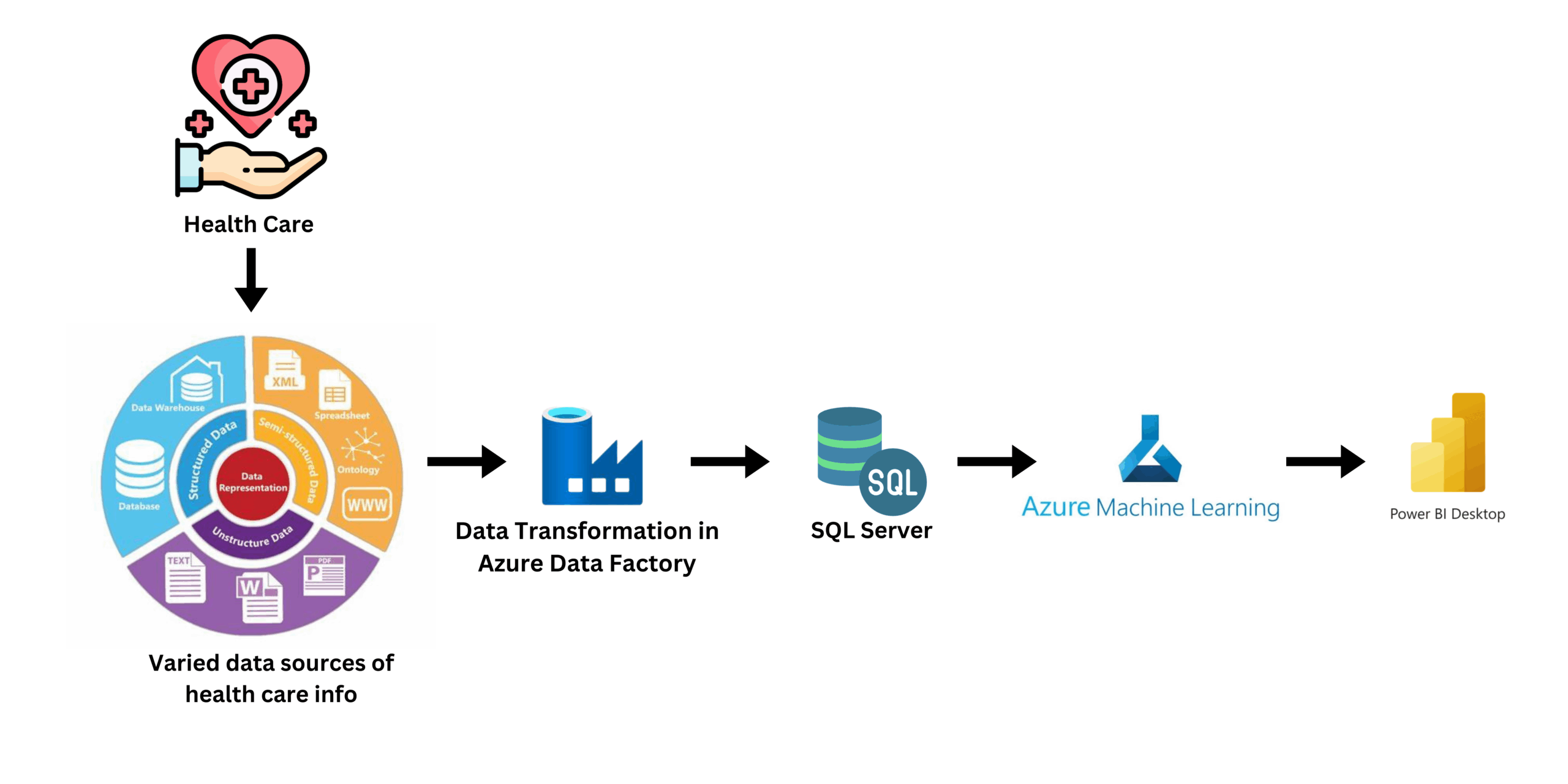
Fabric Implementation on Health Care System
In the healthcare sector, ensuring the continuity of critical applications and implementing robust disaster recovery measures are paramount. This case study explores how a healthcare organization, HealthCare Dynamics, leveraged various components of Microsoft Service Fabric to enhance real-time analytics, data warehousing, data science, and data engineering for improved application continuity and disaster recovery.
HealthCare Dynamics, a leading healthcare provider, recognized the need to modernize its IT infrastructure to ensure the uninterrupted operation of healthcare applications. The organization aimed to enhance real-time analytics, leverage a robust data warehouse, and implement advanced data science capabilities while incorporating disaster recovery measures for application continuity.
HealthCare Dynamics implemented Power BI to create interactive and real-time dashboards for monitoring patient data, resource utilization, and key performance indicators. This provided stakeholders with actionable insights for timely decision-making.
Microsoft Azure SQL Data Warehouse was employed to create a centralized and scalable data repository. This data warehouse allowed HealthCare Dynamics to consolidate and analyse vast amounts of healthcare data efficiently, facilitating data-driven decision-making and reporting.
Azure Machine Learning, integrated into the ecosystem, enabled HealthCare Dynamics to develop predictive models for patient outcomes, resource allocation, and disease prevention. These data science capabilities enhanced the organization’s ability to proactively address healthcare challenges.
Azure Data Factory played a crucial role in orchestrating data workflows across various sources and destinations. It facilitated the seamless movement of data between on-premises and cloud environments, ensuring data consistency and availability for analytics and reporting.
Azure HDInsight was utilized for big data processing and analytics. HealthCare Dynamics employed data engineering techniques to preprocess and analyze large datasets, enabling the organization to derive valuable insights for improving patient care and operational efficiency.
Microsoft Service Fabric served as the underlying fabric for deploying and managing microservices-based applications. HealthCare Dynamics leveraged its dynamic scaling capabilities, automated failover mechanisms, and load balancing features to ensure high availability and continuity of critical healthcare applications.
– Geo-Redundancy with Service Fabric:
HealthCare Dynamics deployed its applications across geographically redundant clusters using Microsoft Service Fabric. In the event of a data-center failure or a natural disaster, the applications seamlessly failover to the secondary cluster, ensuring uninterrupted healthcare services.
– Backup and Restore with Azure Services:
Azure Backup and Azure Site Recovery were integrated into the disaster recovery plan. Regular backups of critical data and application states were performed, allowing for quick and efficient restoration in the event of data corruption or application failure.
The implementation of Microsoft Service Fabric, coupled with the various Azure services, transformed HealthCare Dynamics’ IT infrastructure. The organization achieved improved real-time analytics, data warehousing, and data science capabilities while ensuring application continuity and disaster recovery. The geo-redundancy, backup, and restore mechanisms implemented with Microsoft Service Fabric contributed to the resilience of healthcare applications, ultimately enhancing patient care and organizational efficiency.
By integrating Microsoft Service Fabric with a comprehensive set of Azure services, HealthCare Dynamics successfully enhanced its healthcare applications’ continuity and disaster recovery capabilities. The organization now stands resilient against unforeseen disruptions, ensuring that critical healthcare services remain uninterrupted and accessible to patients in need. This case study exemplifies how leveraging Microsoft’s technology stack can empower healthcare organizations to deliver high-quality care while safeguarding against potential disasters and ensuring business continuity.











© All Rights Reserved. Inkey IT Solutions Pvt. Ltd. 2026