




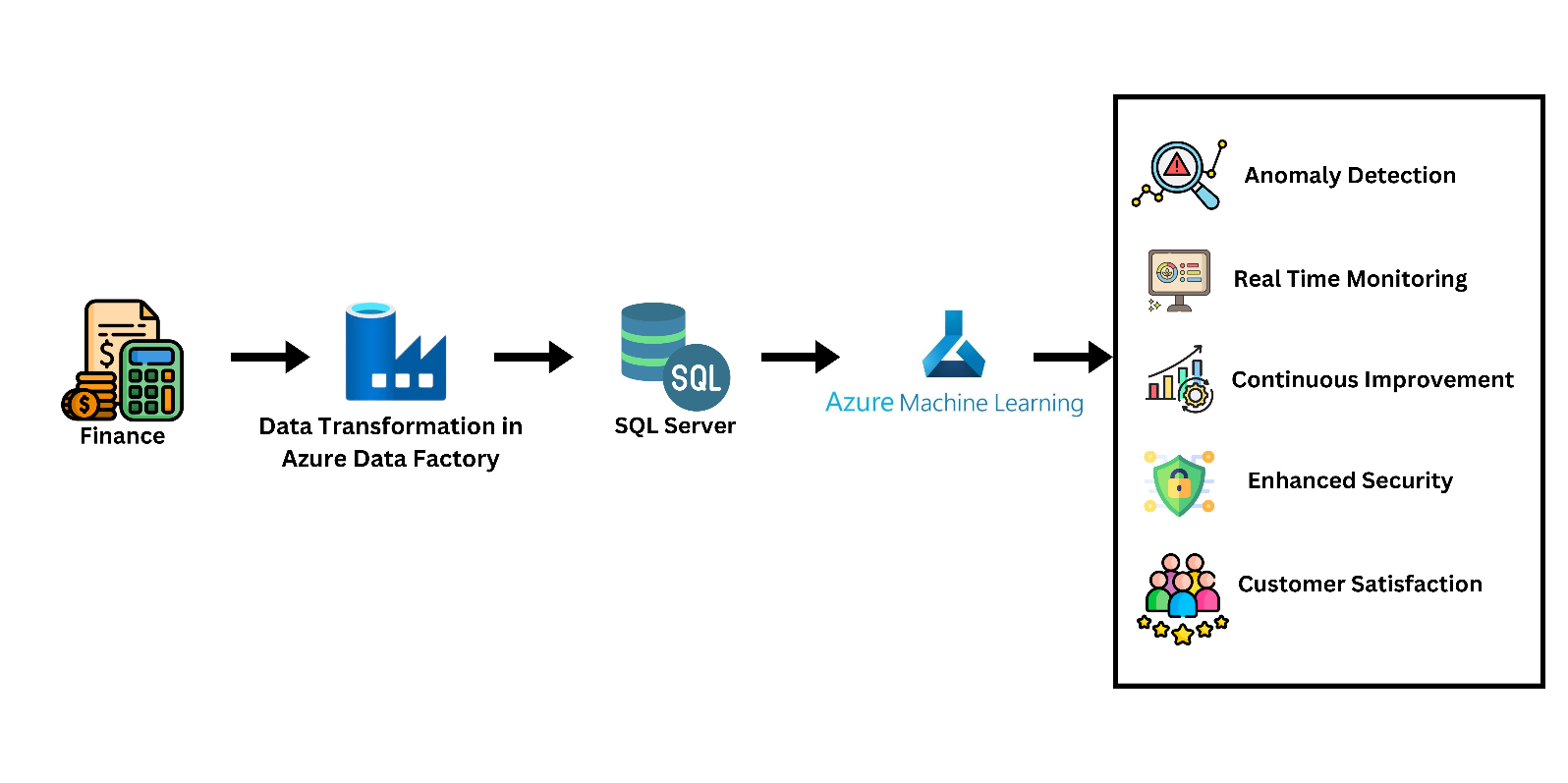
In the intricate landscape of financial technology, the security of applications is paramount, given the critical and sensitive nature of the data they manage. To address these challenges effectively, a strategic amalgamation of Microsoft Fabric (MSFabric) and Machine Learning (ML) stands as a pioneering solution, providing a robust framework for fortifying the security posture of financial applications.
MSFabric for Scalable Infrastructure
The adoption of MSFabric introduces a distributed microservices architecture, offering a scalable and reliable foundation for financial applications. This transformative approach involves:
Microservices Decomposition: Breaking down the complexity of financial applications into smaller, independent services to streamline security management.
Service Isolation: MS Fabric’s inherent capability to isolate services prevents potential breaches from compromising the integrity of the entire application.
Scalability: Adapting seamlessly to fluctuating workloads and data volumes, MSFabric ensures the scalability required for the dynamic demands of financial services.
Within this case study, the pivotal role of Machine Learning comes to the forefront, specifically in the realm of anomaly detection, offering a nuanced and proactive approach to security. This involves:
Consider a major banking institution embarking on digital innovation with the implementation of a cutting-edge online banking platform built on MSFabric microservices. The bank strategically leverages Azure Machine Learning to train a real-time anomaly detection model. This model meticulously analyzes various transactional facets, including:
– Transaction amount and frequency
– User location and device information
– Recipient details
Benefits
The combination of MSFabric and Machine Learning in this scenario unfolds a myriad of benefits for financial institutions:
– Enhanced Security: The combined strength of MSFabric and Machine Learning substantially mitigates the risk of successful cyberattacks.
– Faster Fraud Detection: Real-time anomaly detection facilitates swift identification of fraudulent activity, enabling prompt intervention to safeguard financial assets.
– Reduced False Positives: The fine-tuning capabilities of machine learning models ensure a reduction in false positives, enhancing operational efficiency.
– Improved Customer Experience: A proactive approach to fraud prevention instills confidence in customers, fostering a more secure and trustworthy banking experience.
Ensuring the seamless integration and efficacy of this security framework necessitates careful consideration of key factors:
– Data Security: Rigorous measures must be in place to ensure the secure storage and transmission of all financial data within the MSFabric environment.
– Model Governance: Establishing robust processes for the training, monitoring, and updating of Machine Learning models is essential to maintain their relevance and effectiveness.
– Regulatory Compliance: Adherence to relevant data privacy and security regulations is imperative to ensure the institution’s compliance with industry standards and legal frameworks.
In conclusion, the strategic integration of MSFabric and Machine Learning offers a formidable approach to fortifying the security of financial applications. Through the adoption of microservices architecture and real-time anomaly detection, financial institutions can substantially mitigate the risk of fraud, safeguarding the integrity of their operations and the trust of their customers. Machine Learning emerges as a linchpin, providing a proactive and adaptive layer of defense crucial in the rapidly evolving landscape of cybersecurity.











© All Rights Reserved. Inkey IT Solutions Pvt. Ltd. 2026